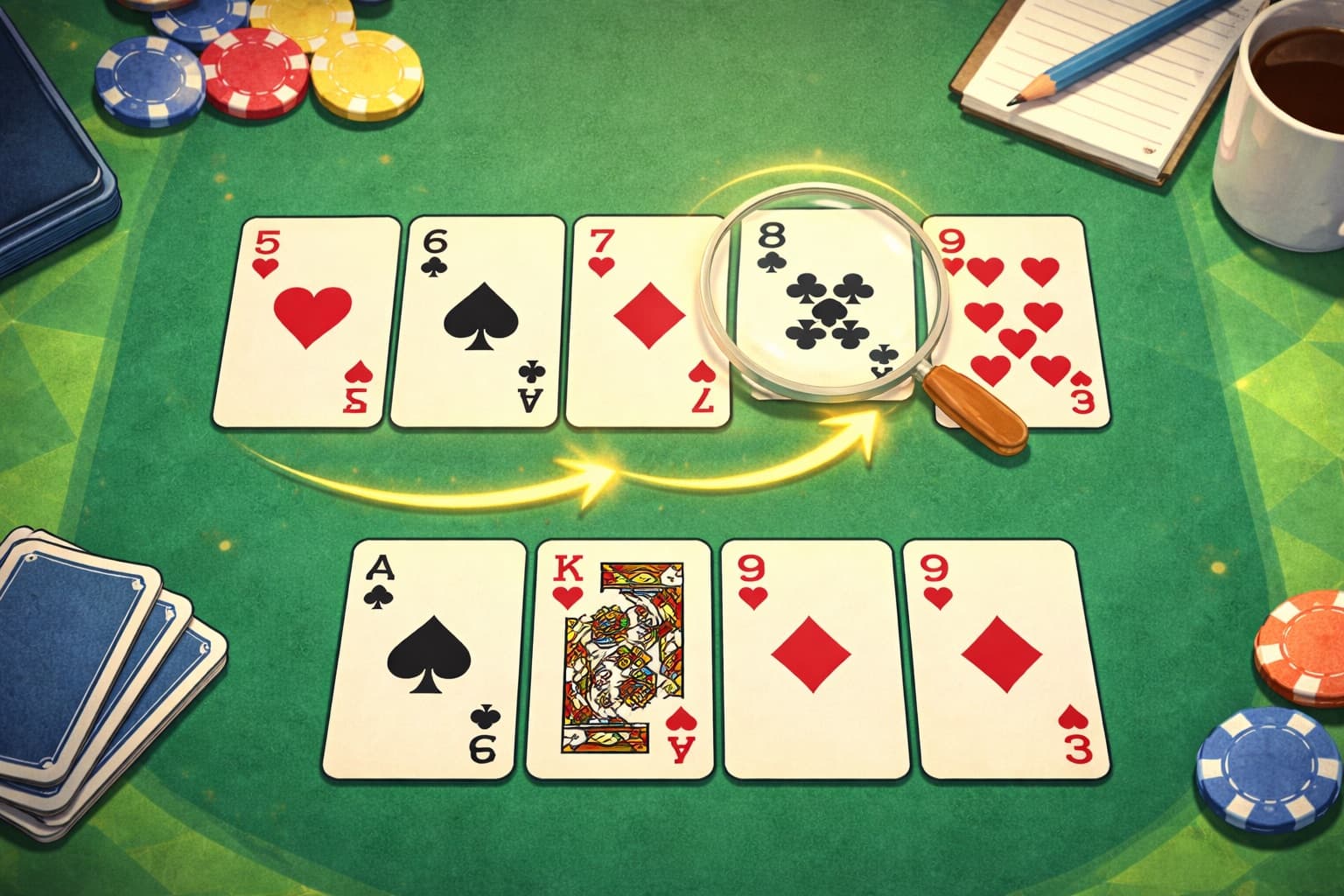
Pattern recognition drills for speed card games (stop thinking, start seeing)
Speed games are won by recognition, not brainpower. These drills train you to see the next play instantly, and they translate directly into Reflex.
Speed card games are not won by “thinking harder.”
They are won by seeing faster.
Pattern recognition is the skill that makes a good player look effortless. It is also the skill that makes your hand feel slow when you do not have it yet.
This post gives you drills that build recognition quickly, and shows exactly how they carry into Reflex.
Quick answer
- Train your brain to recognize adjacent chains (±1) without effort.
- Practice scanning in a consistent order so you stop missing openings.
- Make drills short. Repetition beats intensity.
- Translate every drill into a Reflex habit: scan, decide, play clean.
Why pattern recognition matters more than reaction time
Reaction time is the delay between seeing something and doing something.
Pattern recognition is the skill of knowing what you saw.
If you recognize the next play instantly, your “reaction time” looks fast even if you are not a robot.
In Reflex, this shows up as:
- fewer freezes when piles change
- more chains
- cleaner tempo under pressure
If you want the rules first, read How to play Reflex.
Drill 1: Adjacent chain flash
Goal: stop calculating. Start knowing.
How:
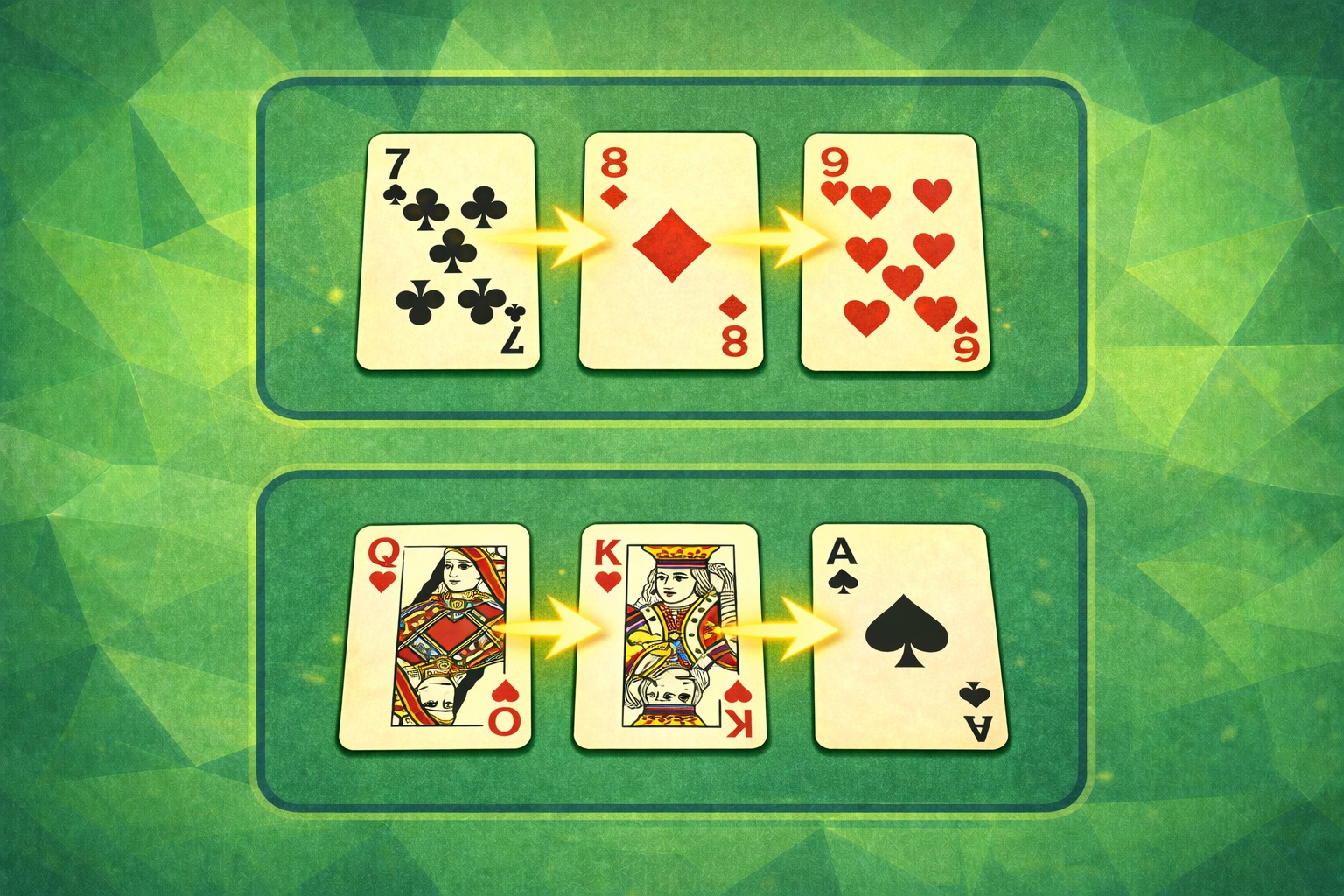
- Pick two adjacent ranks (example: 7 and 8).
- Say out loud what is playable from each (7 plays to 6 or 8, 8 plays to 7 or 9).
- Repeat with different starting ranks.
Keep it simple. You are building automatic recall.
How it shows up in Reflex
When a pile flips from 7 to 8, you already know what became playable. You do not “think.” You play.
Drill 2: Two-target scan
Goal: train your eyes to stop tunnel vision.
How:
- Put two objects on a table (two coins works).
- Alternate your gaze: left, right, left, right.
- Keep a steady pace for 60 seconds.
It feels too easy until you do it in a real match and realize you miss half the table when you do not.
How it shows up in Reflex
This is the foundation of The two-pile scan.
Drill 3: Decision lock (one beat)
Goal: eliminate hesitation.
How:
- When you see two valid options, pick one within one beat.
- Commit.
- Move on.
You are not trying to be perfect. You are training decisiveness.
How it shows up in Reflex
Hesitation is the tempo killer. This drill trains you to keep playing instead of pausing.
Drill 4: Chain-first thinking
Goal: choose moves that keep you moving.
How:
- When you have two options, ask: which option is more likely to lead to another play?
- Pick that option.
This is not advanced theory. It is how you build momentum.
How it shows up in Reflex
Chain potential is how comebacks happen. One clean run flips a round.
If you want a structured way to practice inside Reflex, use A 10-minute practice routine.
A simple weekly plan
Do not overthink it.
- 3 minutes a day: adjacent chain flash
- 2 minutes a day: two-target scan
- play a few rounds focusing on one habit
That is enough to make your brain faster at the right thing.
Related guides
- Train awareness: The two-pile scan
- Practice routine: A 10-minute Reflex practice routine
Ready to play?
Download Reflex on the App Store and try one drill for five rounds.
Waiting for Android? Follow us on Facebook for updates.